Byron Proposes a Brain-Chip Connection to Hazel
Made for LoveByron’s brain-chip proposal to Hazel turns a familiar romantic gesture into a demand for bodily and neural participation. Remembered by Hazel after she has left him, the scene exposes the gulf between Byron’s faith in technological progress and her refusal to let that faith substitute for consent.
The Proposed Connection
Byron’s plan was to place a chip in Hazel’s brain and connect it wirelessly to a chip in his, creating what Hazel described as a meld and “the first neural-networked couple in history.” The proposal involved tandem neurosurgical alterations, not simply a symbolic promise of closeness. Hazel later explained that the procedure had never been done and that Byron was effectively asking her to offer her still-living brain for research and development. She had not consented.
A Proposal Staged as Romance
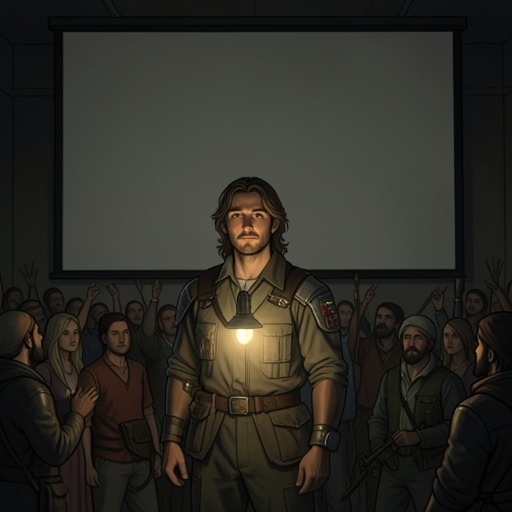
Byron placed the microchip inside a velvet ring box and presented it in a tuxedo. He got down on one knee, opened the box, and asked, “Hazel Green, will you meld with me?” The gesture borrowed the recognizable choreography of a marriage proposal, but the object inside the box made the stakes radically different: the commitment he wanted was a physical alteration that would link their brains.
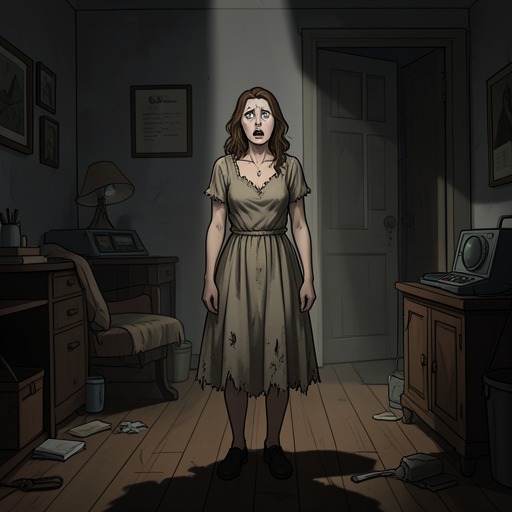
Hazel did not respond with the expected joy. Byron remained on one knee through the argument that followed, holding out the box as though the pose itself could persuade her. He appeared to interpret her refusal as temporary shock at an overwhelming offer, and waited for her to change her mind. Hazel instead turned and left, crying and disgusted, while he called after her to stop and think. His insistence culminated in the question, “What is love if not progress?”
Recollection and Significance
The proposal returns to Hazel as a memory when, during her escape, she sees a lawn flamingo’s raised leg and plastic shape as resembling Byron kneeling. The incongruous garden ornament brings the carefully staged scene back to her amid her difficult attempt to cross the street. She pounces on the flamingo and uses it to help herself walk, turning the remembered image of Byron’s proposal into an object she can physically seize and move with.
The scene’s central conflict is not a disagreement about whether the two are in love, but about what Byron is entitled to ask of Hazel’s body. His language makes technological progress the measure of love; her departure rejects the assumption that an intimate relationship, or a polished romantic ritual, can make an untested brain procedure acceptable. The memory also clarifies why the proposal becomes inseparable from her later fear that Byron intends to control what happens to her mind.